
Ubu Roi :: programme
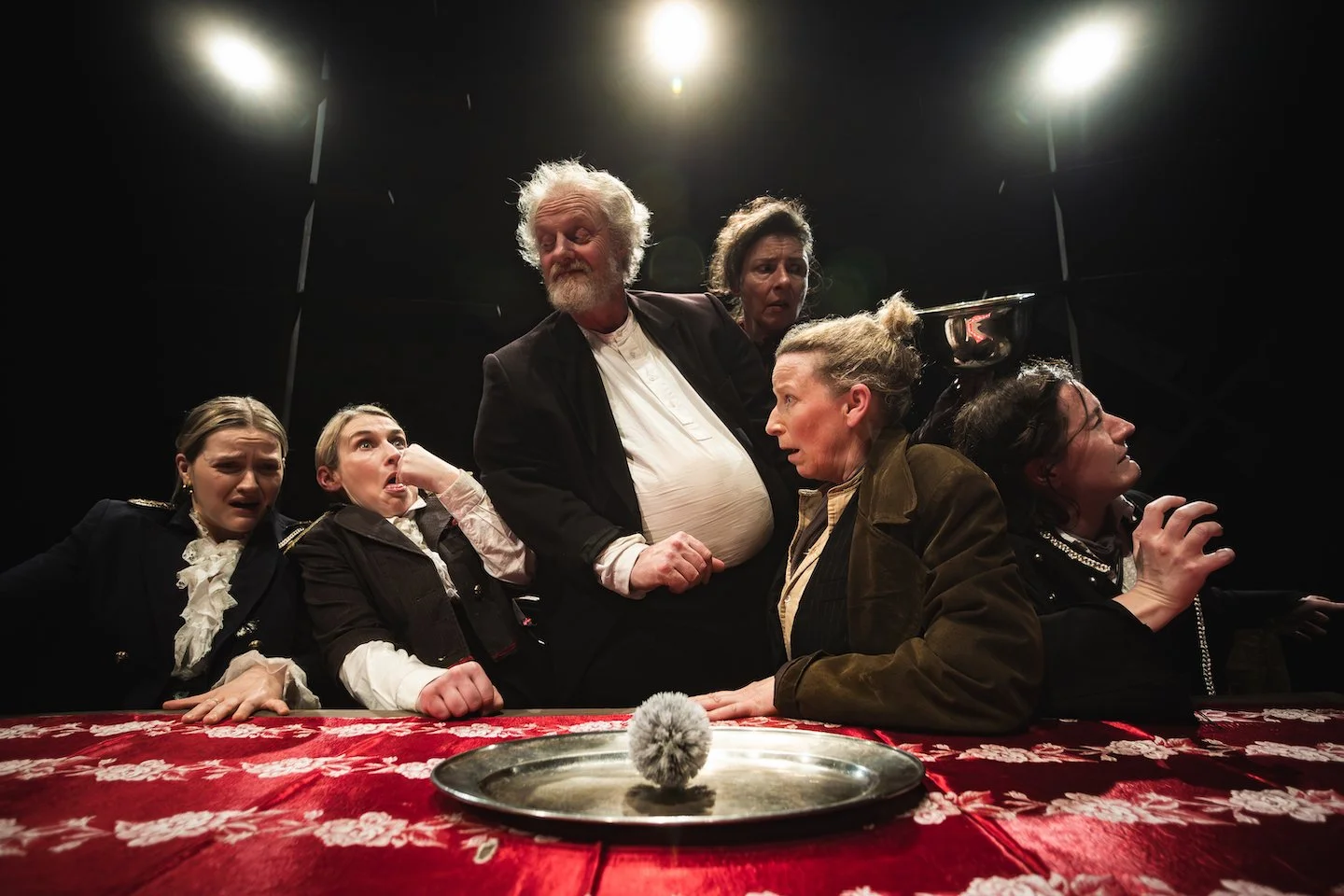
Photos: Peter Martin
Director Niall Henry
Dramaturg - Jocelyn Clarke
Cast
John Carty
Sandra O Malley
Julie Sharkey
Aisling Mannion
Orla McSharry
Meadhbh Maxwell
Set Design - Jamie Vartan
Lighting Design - Barry McKinney
Sound Design - Joe Hunt
Production Manager - Maurice Power
Design Assistant - Dylan Mc Gloin
Costumes - Maura Logue
Set Construction - Alan Clarke
Lighting Technician/Operator - Emily Waters
Lighting Technician - Shane Larkin
Stage Crew - Francis Heraghty & Pete Vamos
Thank You
Cawley Commercials
Coolera Dramatic Society
Sligo Drama Circle
Tomnis D Brogan
Paula Mo Mullan
Hawk’s Well Theatre
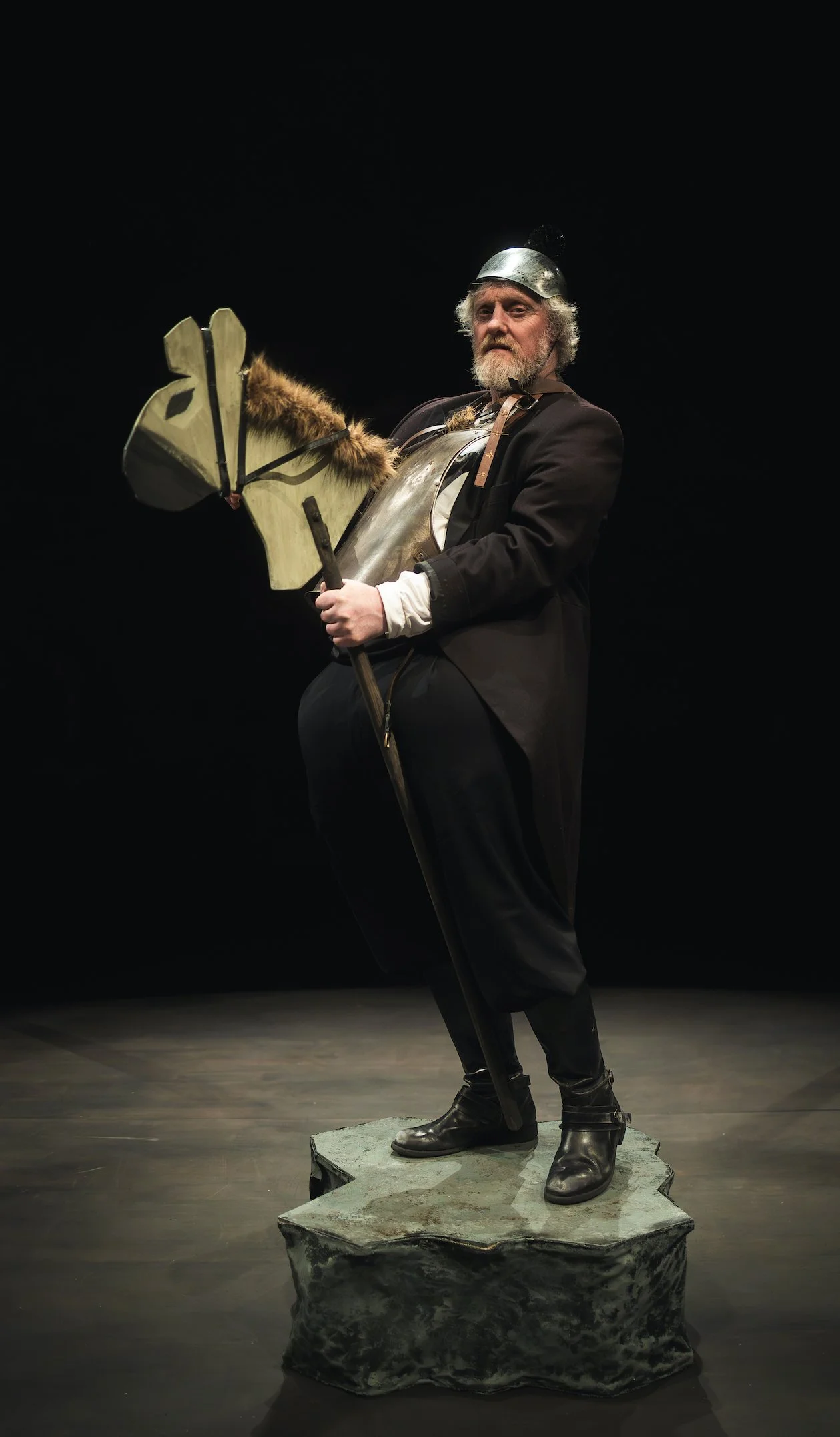
"Ubu Roi, ou, les Polonais" by Alfred Jarry was first performed in 1896. A wild and grotesque comedy, it follows the brutal Pa Ubu as his scheming wife convinces him to murder the King of Poland and seize power. Once crowned, Ubu terrorizes his subjects through greed and violence, sparking invasion and revolution.
A stunning, controversial work that immediately outraged audiences with its scatological references during the 1896 premiere Ubu Roi, was presented on the 10th of December, at the Théâtre de l’Oeuvre, by director Aurélien Lugné-Poë. Both scandalous and revolutionary, the play shattered conventions and paved the way for modernism, Dadaism, and the Theatre of the Absurd.
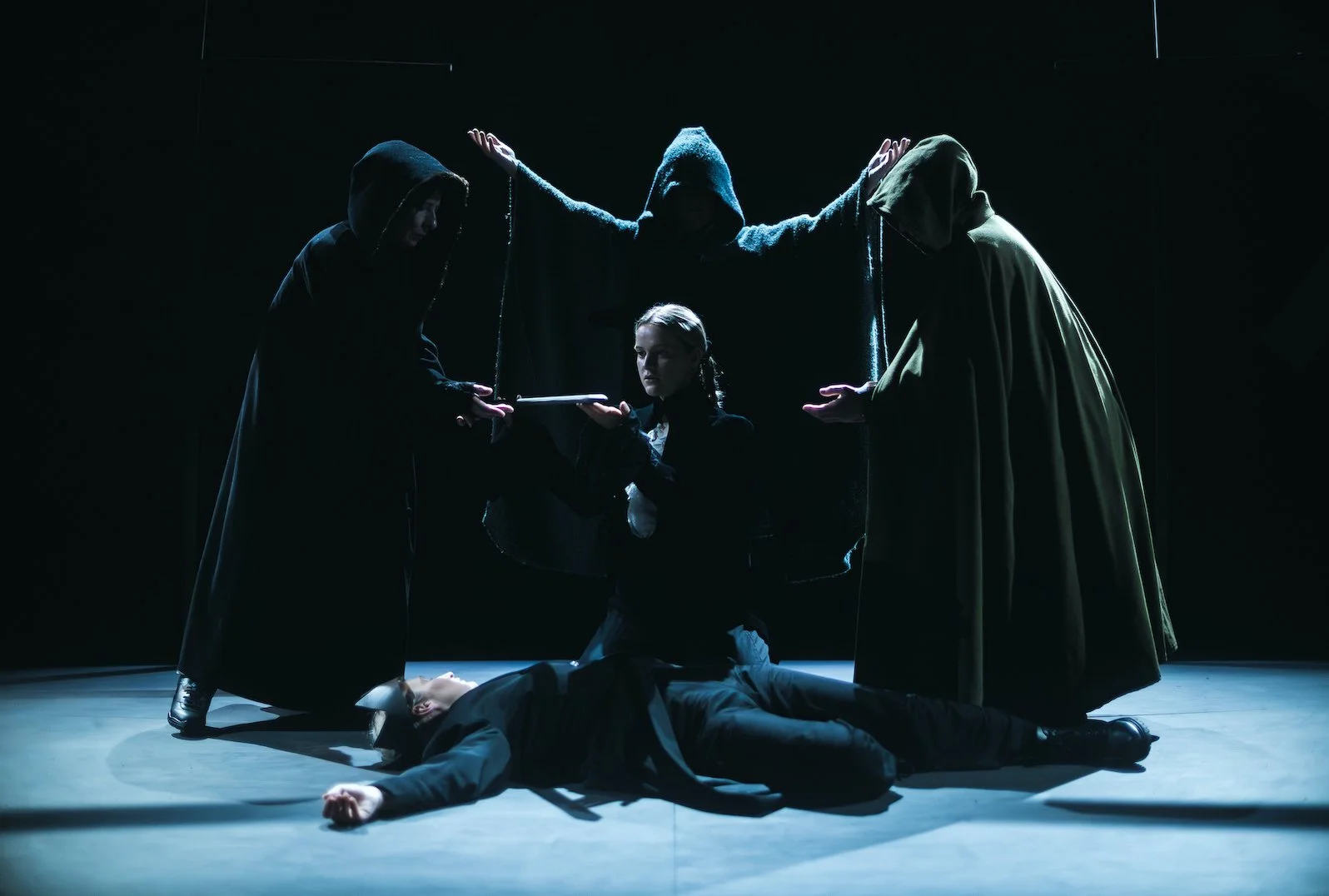
The farce, originally written as a parody of one of Jarry’s teachers, a physics teacher, a plump, inept man who so amused his students that he became the subject of Jarry’s first attempt at drama, Les Polonais, staged with marionettes. Père Heb, as the physics teacher was called in it, had a prominent gut, a retractable ear, and three teeth (stone, iron, and wood). These features by themselves make him a distinctive figure in the history of French drama. Years later, when Jarry revived Heb he made him somehow even more ridiculous and put him at the centre of Ubu roi, a play so contentious that its premiere, was also its closing night.
Numerous witnesses later published accounts of the show. The most notable among them was a confused W. B. Yeats, who apparently liked the show well enough while it was happening but turned against it, beautifully if ponderously, in his autobiography:
The audience shake their fists at one another, and the Rhymer [his partner] whispers to me, “There are often duels after these performances,” and he explains to me what is happening on the stage. The players are supposed to be dolls, toys, marionettes, and now they are all hopping like wooden frogs, and I can see for myself that the chief personage, who is some kind of King, carries for Sceptre a brush of the kind that we use to clean a closet [i.e. a toilet]. Feeling bound to support the most spirited party, we have shouted for the play, but that night at the Hotel Corneille I am very sad, for comedy, objectivity, has displayed its growing power once more. I say, “After Stephane Mallarmé, after Paul Verlaine, after Gustave Moreau, after Puvis de Chavannes, after our own verse, after all our subtle colour and nervous rhythm, after the faint mixed tints of Conder, what more is possible? After us the Savage God.”
The poet Catulle Mendès is deeply shaken in his account, too, though not entirely unpleasurably:
A new type has been put before us, created by the extravagant and brutal imagination of a man who is a sort of child. Père Ubu exists… You will not be able to get rid of him; he will haunt you and perpetually force you to remember not only that he passed this way, but that he has arrived and is here…
Only Mallarmé, who’d seen the script, had anything kind to say about it. “With the skill of a sure and sober dramatic sculptor,” he wrote to Jarry, “and with a rare and durable clay upon your fingers, you have set a prodigious figure on his feet, together with his troop.” But even this is not unreserved praise: “He enters the repertoire of high taste and haunts me.”
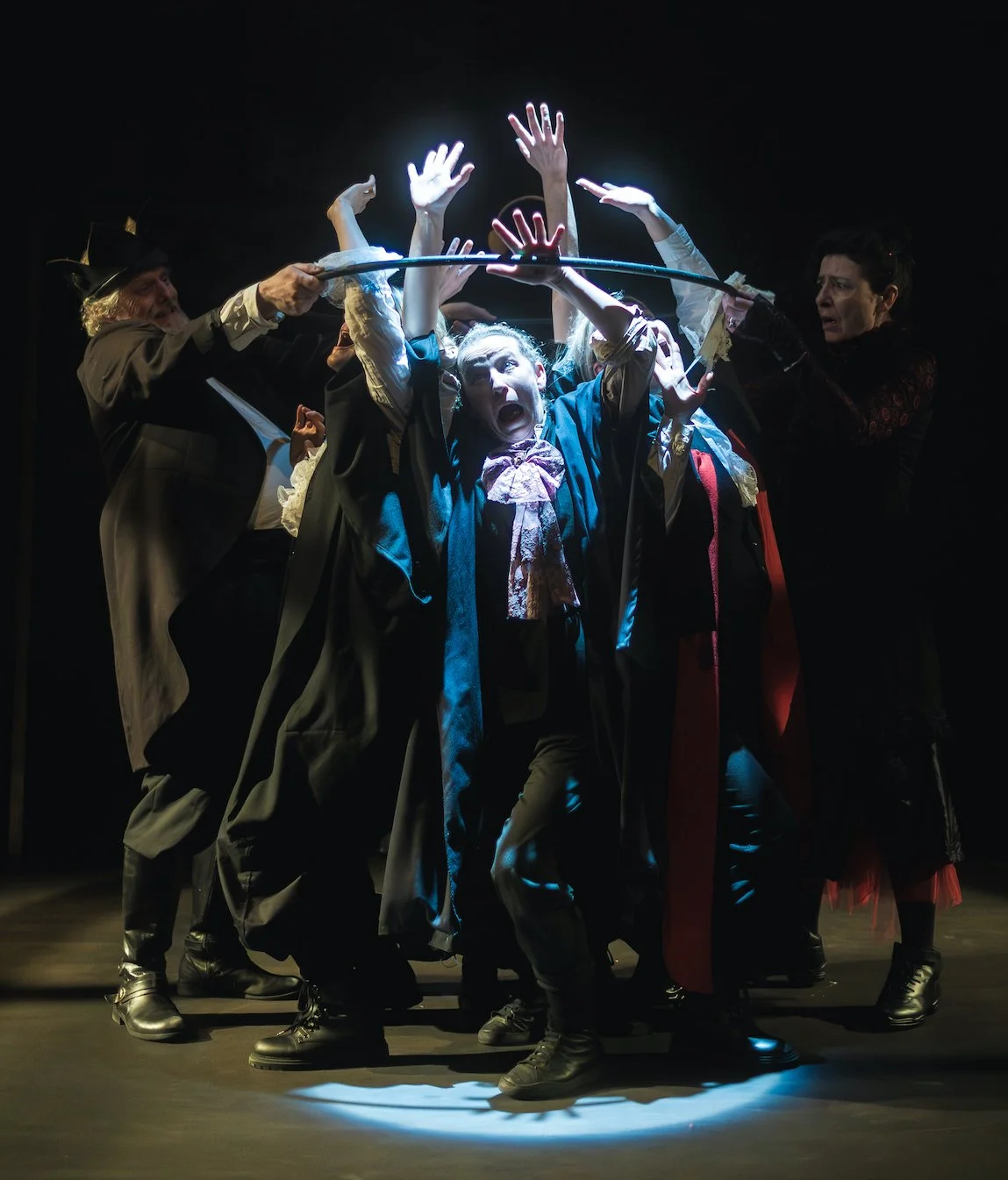
The play was a profound attack on the era’s complacency; it was as startling as Stravinsky’s Rite of Spring would be a quarter century later. And Jarry was duly proud of his work: “It is not surprising that the public should have been aghast at the sight of its ignoble other self,” he wrote later, “which it had never before been shown completely…the comedy at the most must be the macabre comedy of an English clown, or of a Dance of Death.
Jarry wrote several sequels, including Ubu enchaîné (1900; “Ubu Bound”) and Ubu cocu (1944; “Ubu Cuckolded”), which were translated and published with Ubu Roi as The Ubu Plays (1968).
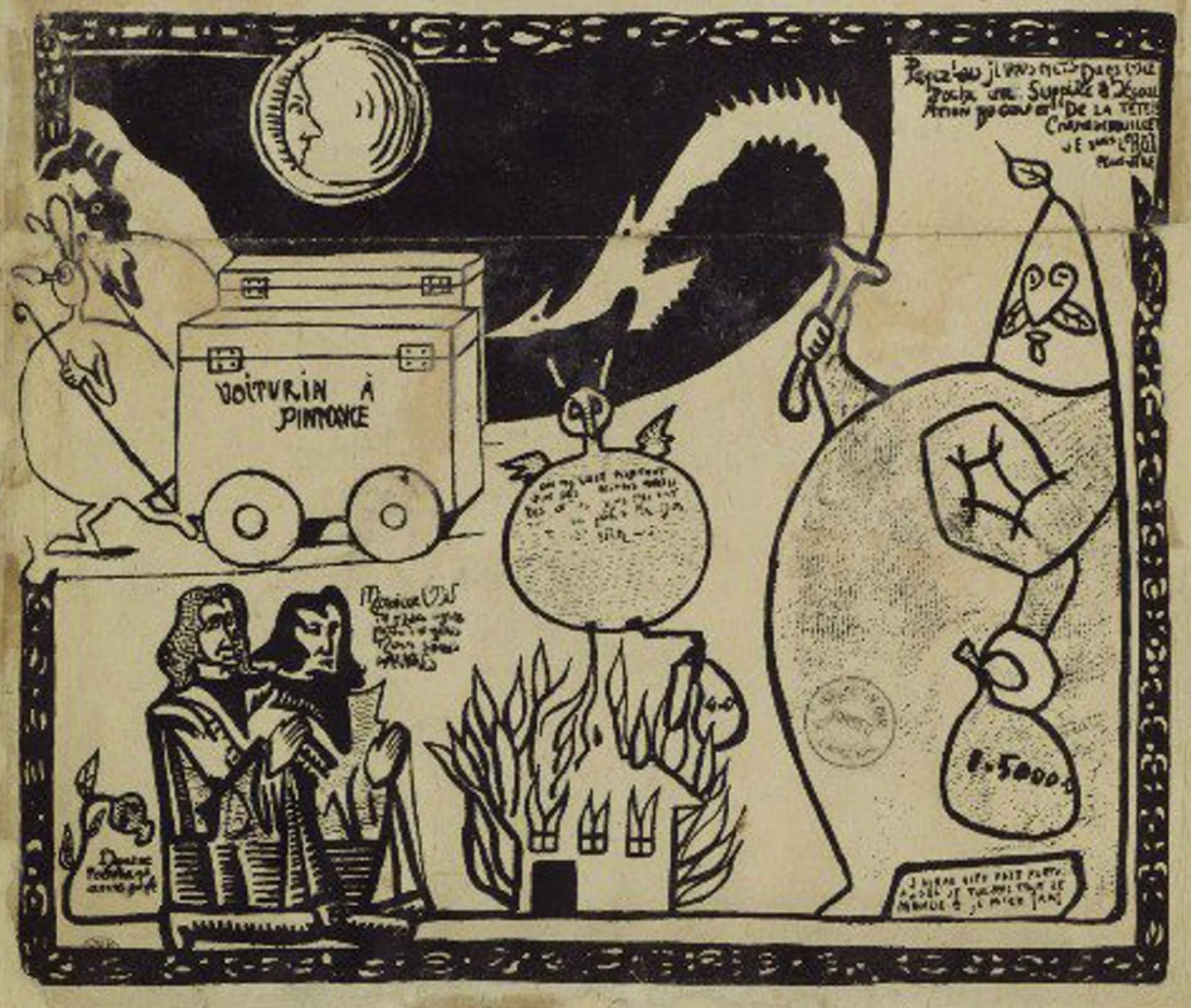
Cover from the First Edition